As I watched the latest heat of Melodifestivalen, the Swedish finals for the Eurovision Song Contest, I couldn’t help but feel I’d heard the songs before.
“Rich” by Julia Alfrida sounded very similar to “Royals” by Lorde (it even contained the line “Do you want to be royal?”.
“The Silence” by Frida Green had a very “Moving On” by Sarah Dawn Finer vibe about it. Or, as one of the hosts described her, Sarah Fine Diner.
And the song “New Religion” by Anton Ewald sounded like pretty much every Melodifestivalen entry in the last decade.
Still, it was nice to see Anton back on the contest. He’s a very, very attractive man. Since he last competed in Melodifestivalen, he’s moved to the United States, and he’s now married. The fact he married a woman surprised a lot of people in Sweden, as it was widely speculated he was gay,. There was a reference to it, when one of the co-hosts said to the other, Oscar Zia (who is openly gay) something about how he would really like to get to know Anton. Quickly, Oscar replied (with a slight grin), “But he’s married”.
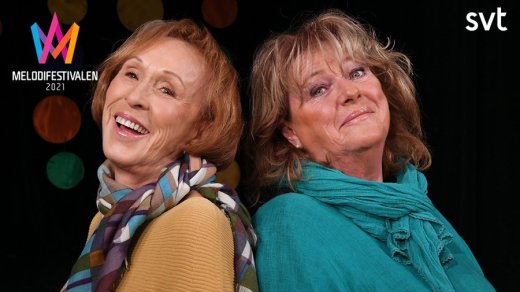
There was a fun retro feel to the ridiculously named “Rena rama ding dong” by seventy-somethings Eva Rydberg and Ewa Roos.
A friend and I caught up late this afternoon, and we both agreed there was nothing terribly exciting about the entries in the second heat.
You know how the internet is full of those stupid memes? “Have you ever shoplifted?’. “Have you ever skinny-dipped?” “Have you ever kissed a member of the same sex?”. I admire people like Tom who have the time and patience to fill in one of them, because I usually lose interest after the fourth or fifth question.
But as of last night, I feel a new desire to fill one in, especially if it asks the question “Have you ever been to an all-male jelly wrestling competition?”. Because for me, the answer is yes.
Andrew called me on Tuesday night wondering if I was interested in going along. Without even half a thought I said yes. How could you possibly say no to such an invitation. Although, to be frank, I wasn’t really sure what to expect, and good Catholic schoolboy inside me did go “ick” at the thought.
For me, the phrase”jelly wrestling” immediately summons up images of scantily clad women engaging in a pseudo-lesbian experience for the sexist pleasures of a bunch of blokes. I remember vividly going past a pub on New Canterbury Road where they advertised “jelly wrestling” on a Wednesday night and being somewhat perturbed by the thought.
In going along to an all-male jelly wrestling competition I had to struggle with my own conscience. “Was I also being sexist?” “Was I also contributing to exploitation, albeit in a different kind of way?” were the issues I struggled with. Briefly.
When I met Andrew at the pub before-hand, I was still a little unsure about what the night might present us with. As the bar we were at was a favourite bear and leather haunt, I had images in my mind of big beefy blokes writhing about. At worst, I had images in my mind of Homer Simpson-like blokes in a bath-tub full of jelly.
I’m not sure how edible the jelly was, though I did reach in to have a sniff before the action began. “Do you think it’s Port Wine Jelly?”, I asked Andrew, remembering the Cottees Jelly of my childhood.
In the same way that a scientific researcher found the image of Homer Simpson running on a treadmill in his underwear to be “strangely compelling”, this was also how I found the experience of watching the jelly wrestling.
Imagine if you would big beefy blokes with hair all over their backs, including two rugby union playing members of the Sydney Convicts, writhing about in a small pool. By the end of it, they’re both exhausted and completely covered in jelly in all sorts of places. Throughout all of this, I had images in my mind of going to the beach and then coming back home, and when you’re having a shower a lot of sand falls out of your swimwear, and imagining the same thing happening with jelly.
After the event we got talking to a mate of Andrew’s who had competed in the event in previous weeks. “It’s pretty exhausting”, he told us. “It was pretty exhausting watching”, I noted also.
I’m having a day where the weather has matched my mood. It started off fine and sunny, but somehow ended up a little shitty.
Waiting for a bus at Circular Quay, and getting my recently dry-cleaned suit wet, wasn’t exactly how I thought I’d end the day.
When I woke this morning it was sunny and very pleasant. In fact, I went to work – deliberately – without a jacket. And as I looked around the city today and noticed people wearing thick scarves – honestly, it’s the second of August – I felt a slight level of scorn.
As the day progressed, I became increasingly grumpy. There were a few things today which kinda annoyed me, and actually took me most of the day, and some the night, to recover from.
In fact, the grumpiness continued into the night, and took quite some time to overcome. I guess it happens to everyone whose life and work merge somewhat? As I long as I’ve had a job, the line between both has been blurred. I guess it’s because my job is “about life” in many ways, or at least that’s how I rationalise things, I guess.
Helpmann Awards Finalists
But in the midst of it all, there was a bright spot: I went to the announcement tonight at the Opera House of the finalists for this year’s Helpmann Awards.
The Helpmann Awards is the annual awards celebration for live performance in all its forms. Thus tonight’s announcement of finalists included everything from pop concerts to opera.
Some years at the Helpmann Awards you actually get a little bored, as the same show seems to come up again and again. This year, there are some repeat finalists, but there’s also quite a few unexpected ones too. And quite a variety in the selection of finalists, which I think is a good thing. There’s a report here about who’s in and who’s out this year.
Best of all this year? There’s a cabaret category for the first time, and the host is David Campbell. Campbell conceded he’s following in the footsteps of some great performers, including Jonathan Biggens who has been terrific over the last few years.
After a bit of a shitty day, it was nice to attend something with such a degree of happiness and optimism.
Aside from that, it’s a cold, wet night in Sydney tonight. After a glamorous early evening, I’m at home wearing my jarmies and watching tv.
Oh, and did I mention my tv challenge for the week? I’m trying my best NOT to watch Foxtel this week. I’m trying to see if I can “give it up” now that free digital has improved somewhat. If I can do without it for a week, I’m gonna dump Foxtel. My only weakness so far was succumbing to an episode of “Are You Being Served?”. In the meantime, Madonna is on Letterman, free to air, and so I better go. Cya.
We knew within seconds we were in the “wrong movie”. We had already felt a little uncomfortable about the size of the crowd and theatre, expecting a much larger crowd in a much larger theatre. But we sat there, chatting, half-watching the ads, until the opening credits appeared and within seconds we realised we were in the wrong theatre. We got up quickly, found the right theatre, and then made our way to the second front row, as the much larger theatre was close to capacity.
We knew little about the film, except that it was based around the fictional character of small-town radio announcer, Alan Partridge. Since we both work in radio, my colleague/friend and I thought it would be fun to go to. Indeed, there are lots of very funny “radio jokes”, and there were lots of moments when we both laughed out loud, making comparisons in our minds between some of the extreme egotism of the character, as an amplified version of the some of the behaviour we sometimes seem in our colleagues.
There were so many moments when we, and all of the cinema, laughed out loud at the roller-coaster of unexpected twists and turns the movie took. There were no moments of predictability. The film romped along at a cracker pace, and importantly, was about the right length. Despite the comic value of it all, the film has heart, and despite the sometimes farcical comedy, all of the characters were, in their own ways, totally believable.
Alan Partridge in the studio
It’s definitely a film I’d like to see again, as I’m sure there are moments, actions and lines I’d probably pick up on which were maybe lost on first viewing. I’d also like to see the first couple of minutes we missed from being in the wrong cinema.
“We know this stuff, but most people don’t”, a colleague reminded me the other day, as we spoke about the appropriateness of what you share online, and in particular on social media. We were talking about the number of political candidates who have lost pre-selection in the Australian election in the last couple of weeks, due to things they’ve published on social media.
And I use the word “published” intentionally. Often it seems with social media, people think they’re just sending a private note to a few friends, forgetting that note can be shared with others, and remains “somewhere online”, even if they feel they have set their privacy settings quite high.
One of the earliest rules of journalism I learned was the difference between slander and defamation. Slander is when you say something, and it’s probably less able to be proved. Defamation is when you write something down, or say something, and so there’s a record of what you’ve had to say. What everyone who uses social media needs to better understand is anything you say on Facebook, Twitter etc is potentially defamatory.
It’s also potentially actionable: someone could eventually take you to court, so be careful about what you say about that ex-partner, for example.
By way of interest, I also help a family member with his website. I disagree with virtually everything he has to say, quite strongly. For the most part, I turn a blind eye to the opinions I disagree with. But on a couple of occasions I’ve told him, “you’ve got to pull that down”. Sometimes he crosses the line beyond the point of “opinion”. “You can’t say that, you could go to gaol over that”, I’ve warned him.
Though it was always usually the case people would never declare who they voted for at elections, that’s all changed too, it seems.
On Friday, after I pre-polled and numbered the boxes 1, 2, and 3, for the Australian Senate, I came to a halt. I had the sudden realisation I disliked a whole lot of the parties on offer, and knew very little about the rest. “Oh my God”, I thought to myself, noting the Australian Democrats were on the ballot paper (like many Australians, I thought they no longer existed). Some of the party names were, in my view, either confusing or intentionally misleading. After scanning the paper from left to right SEVERAL TIMES, I eventually ended up with the political parties numbered 1-6 for a valid vote.
I pre-polled this time, because I had been contracted to work for the Australian Electoral Commission on both election day, and the day after. It’s something I’ve never done before, but when I saw the advertisements a few weeks ago, I instantly put in an application to work. The money was bonus, but I was more interested in learning about what happens behind the scene.
We were prevented from using our phones and posting to social media throughout the day, though a few of us snapped some shots before the activity began.
On polling day, I spent most of my time making sure people put the ballot papers in the right boxes. I spoke to, literally, hundreds and hundreds of people, and with the exception of three or four, people were really lovely.
I discovered a lot of people were unsure of the name of their electorate. I also helped a few people with questions about the political process, including helping a few people with an understanding of the difference between the House of Representatives and the Senate.
I also learned a lot about the cultural profiles of many different parts of Sydney, as the polling booth I was based at – Town Hall – had people voting from all over the city.
I had one guy who said he was looking to vote in Page, which gave me a smile. “I’m from Lismore”, I told him, to which he replied, “And so am I”. It was a nice connection to have..
After polling closed, I spent four hours going through the lower house seats in NSW, and learned a lot about how two-party preferences. Though my legs were a little sore by the end of it all, it was a terrific day, and I’d highly recommend it to others.
Then on Sunday, I spent a few hours sorting through the Senate papers, ahead of them being sent off for scanning and, I assume, electronic counting. Thankfully, there weren’t too many votes with “dicks and balls” drawn on them.
Doing this was an unexpected change to my routine, as I would normally have planned to spend the weekend bingeing on the Eurovision Song Contest. Eventually, I caught up with the contest, which I thought was quite good this year.
One of my favourite parts about Eurovision is watching the votes come in from the many different countries. Iceland was particularly impressive.
Though, initially I didn’t think much of the Kate Miller-Heidke song chosen to represent Australia, I thought it was very good. An interesting song, combining elements of pop, opera and dance, and an exceptional acrobatic performance. One of my favourites, she did us proud!
And of course, I loved Sweden’s great sing-a-long pop number from John Lundvik.
For a week or two, I’ve been in search of a video to use at the “Tribute to Colin”, to be held in a couple of weeks on what would have been his birthday. Colin was one of those featured in a copy of a 1994 documentary about Arthur Stace, the man who wrote “Eternity” on Sydney foothpaths for many years.
The documentary originally screened at the Sydney Film Festival in 1994, and later on the ABC. Colin featured in the documentary as the actor who sang the song about Arthur Stace in a SUDS production (Sydney University). With many thanks to the film-maker, Susan Mackinnon, I’ve obtained a copy of the documentary, and I’m sure this segment will make a wonderful contribution to the tribute.