Graeme and I went to the pub tonight to watch the footy. Well, it wasn’t so much “Graeme and I”, it was more “Graeme”. We were sitting at the pub tonight having a few bevvies, chatting, and watching the world go by. And then all of a sudden, I noticed Graeme was watching secretly but consistently watching the television out of the corner of his eye. I looked up at the screen, just as they were showing a close-up of Kevin Rudd and Julia Gillard sitting in the crowd. “Who are the WB and BL’s?”, I asked Graeme, who responded instantly.
For a card-carrying poof, Graeme seems to know a fair bit about AFL. “It’s the only code of football”, he added as I noted his interest. But that’s what happens when you grow up in an AFL state like South Australia or Victoria, which makes the states culturally quite different from NSW.
I doubt you’d find someone from NSW who would say “NRL is the only code of football”, because, culturally – and this is a vast generalisation – as a group of people we just don’t care that much. Anyway, indicative of how people in NSW feel about football, I’m now bored with this topic and so will move on to the rest of my day.
While Graeme watched the footy, I watched the fish in the tank below.
A faux US dollar bill in protest at American foreign policy.
Other highlights included going out for lunch with a couple of colleagues, with the intention of choosing a venue for our Christmas Lunch (done), picking up a cake for someone’s birthday, and buying some flowers for someone about to have a baby.
We all loved the cake (half the price of the usual cakeshop we use around the corner, and much healthier and tasty), we loved the pub, and we loved the flowers, though we did have a laugh in the flower shop.
“We only do monochrome”, the florist noted, when we asked about how she puts flowers together. Whereas some people like bunches of flowers of many different colours, her approach was keep it simple. It was almost as if she was saying, “We do it to save people from themselves…” We all had a good laugh about that, and a new phrase, “We only do monochrome” has somehow found its way into the lexicon of our workplace. :)
The only other thing of interest today was seeing the “September 11 Architects” outside the ABC and UTS. They were from a group called “Architects for an investigaton” (or something like that). I only had a brief look at their paperwork, but they seem to be a group of the view the Trade Towers should not have collapsed from the impact of the aircraft, and that something else caused them to come down.
So yeah, it was an interesting and somewhat varied day.
One of the most remarkable things about recording interviews for the Limb Shift podcast has been hearing about the transformative impact of limb loss.
A few days ago, I spoke with Ian Gawler. Now in his 70s, I remember watching him on television as a child when he spoke widely about using meditation to navigate his bouts of cancer.
Because Ian is also an amputee with more than 50 years of lived experience, I recently reached out to invite him onto the podcast. Unsurprisingly, he has been interviewed countless times about cancer and meditation, but he mentioned that no one had asked him about his amputation since the 1970s.
He wondered why. My theory is simple: deep down, everyone in the media worries they might contract cancer, but no one really expects to face an amputation.
So, here it is—an article exploring Ian’s experience as an amputee, with the full audio episode to follow when The Limb Shift launches later in 2026.
Ian Gawler grew up in an Anglican family and regularly attended church on Sundays.
Reflecting on his early worldview, he noted:
“I had this Sunday school vision of, you know, be a good boy and life will treat you kindly.”
However, when he was around eleven years old, three momentous events occurred in rapid succession: his mother died suddenly, his dog was run over and killed, and an incident occurred on a school camp.
Rather than making him resentful, these events propelled him to look deeper into life:
Already interested in science with the goal of becoming a veterinarian, he began reading widely on philosophical and existential topics and repeatedly encountered the concept of meditation.
As a young scientist, however, he found that the books of the day treated it only tangentially without providing concrete definitions or instructions. He spent years putting off the practice while focusing on worldly ambitions and his education.
Education, Athletics, and Career
Ian graduated as a veterinarian and initially immersed himself in material pursuits, even enrolling in a Bachelor of Arts degree because of his love for literature.
He made a conscious choice to put his personal development and spiritual path on hold to attend to the material things of life, reasoning that he would get everything nicely set up first.
Alongside his professional pursuits, he was also a passionate decathlon athlete.
Reflecting on his athletic background, he explained:
“I was a decathlon athlete. And particularly in my day, that meant you were reasonably good at everything, but not particularly good at anything.”
When cancer emerged in early 1975, it led to the amputation of his leg through the hip.
Describing the immediate mental pivot following the amputation, he noted:
“It was as plain as day that if I focused on what I had lost, I was going to have a miserable life. And if I focused on what was possible, then all sorts of things were possible.”
The Journey Into Meditation and Lifestyle Medicine
Faced with a terminal prognosis and poor medical expectations, Ian sought out what in those days were called alternative approaches. He read Meditation in Action by Chogyam Trungpa and began practicing meditation for half an hour every day for a year.
Later, after reading a report by psychiatrist Dr Ainslie Meares—who hypothesized that intense meditation might actually reverse cancer progression—Ian met with him and dramatically increased his practice. He described this integration:
“I started to meditate quite intensively, like three hours, up to five hours a day, as well as combining that with a very intensive dietary regime and other things…”
Several years later, after experiencing a remarkable recovery, Ian returned to work as a small animal veterinarian. He used a rolling chair to scoot around his surgery. Observing that many clients came in to talk about their own or family members’ cancer diagnoses, Ian eventually started the Melbourne Cancer Support Group in 1981 to help people attempt to recover against the odds.
Managing Phantom Pain and Acceptance
Early in his recovery, Ian experienced severe phantom limb pain on top of a major panic attack. He recalled:
“I realized that for me, it seemed like the root problem was I had not really accepted the leg had been amputated.”
By spending an entire day deeply accepting his new bodily shape and convincing himself that his nerves stopped at the hip. He successfully resolved the phantom pain.
Rather than using a cumbersome prosthetic limb, he opted for crutches, noting:
“I [am] so much more mobile with crutches and, you know, fifty years later, happily, I am still reasonably mobile.”
When discussing self-consciousness and public reactions to his one-legged mobility, Ian emphasized self-acceptance:
“We have all got strengths and weaknesses haven’t we? (We have) probably all got beauty spots and ugly bits. But we are what we are.”
Later Life and Continuing Practice
Now in his late seventies, Ian maintains a structured daily routine that prioritises mindfulness and meditation. Discussing the enduring value of these practices, he noted:
“Exercise is really important. What you eat is really important. What you drink [is] really important, who you hang out with, all those sorts of things. But all those things are dependent on your mind. It is the mind that decides what you do and how much of it; therefore we need to train the mind, and meditation is the ideal way to do this.”
Reflecting on his journey through major adversity, Ian concluded:
“People can have confidence there is the genuine possibility you can transform adversity into something really meaningful and in fact, important.”
As a young man in Germany the world of Wojtek Czyz was abruptly upended on 11 September 2001. Playing his last amateur match before taking up a professional football (soccer) contract, he sustained a severe injury.
“I got a hit from a goalkeeper while playing football, and got an injury which caused what is called compartment syndrome. Unfortunately, the surgery and all the support from the hospital were done too late. And this is why my lower leg became necrotic, which means everything was dead.”
Because the damage extended through the joint, the procedure resulted in an above-knee amputation. At just twenty-one years old, standing on the precipice of a professional contract, Wojtek faced a profound psychological crisis.
The turning point came during rehabilitation three weeks post-amputation, when he met Roberto Simonazzi, a German sports therapist, former elite Paralympic athlete, and fellow above-knee amputee. Finding someone who truly shared his lived experience proved to be transformative. Wojtek notes the vital impact of this encounter:
“That was for me a game changer, that this guy knew exactly what he needed to tell me to open my eyes and take away these black demons out of my head, that my life was over, and simply open new doors for me. And the new door was Paralympic sport. Basically, six months after my amputation, I was already the German champion in the 100 metres and long jump.”
This pivotal mentorship instilled a philosophy that Wojtek carries forward today: that recovery is “all about perspective and all about belief.”
Recognising how crucial that initial guidance was, he shared in an interview for The Limb Shift podcast, he has dedicated a significant portion of his life to visiting hospitals, talking to fresh amputees, and lifting the heavy shroud of insecurity surrounding body image, mobility, and future prospects.
A Legendary Career in Paralympic Sport
From those astonishing beginnings just six months post-amputation, Wojtek rapidly ascended to the absolute pinnacle of international disabled athletics. Over his stellar competitive career representing Germany, he became one of the most recognisable and dominant figures in Paralympic track and field. He captured multiple Paralympic gold medals—shining brightly at the Athens 2004, Beijing 2008, and London 2012 Games—while setting world records in the 100-metre sprint, 200-metre sprint, and the long jump.
Two years after losing his leg, Wojtek also pursued a degree in sports science, bridging his personal journey with rigorous biomechanical research. He explains:
“I did a lot of biomechanical research in regard to the movement of amputees, and especially in sprint or long jump. We did a lot of analysis, and even developed a blade together. So there was a lot of passion in it because I was part of the studies.”
Global Impact
Driven by a desire to share what he described as the privileged level of medical and prosthetic support he received in Germany with populations lacking similar resources, Wojtek and his wife, Elena Brambilla—a former professional high jumper—embarked on an extraordinary global humanitarian mission. They sold their possessions, built a catamaran equipped with a technical workshop, and sailed around the world to deliver custom-crafted mobility solutions for people with limb loss and limb difference.
Describing the impact of this venture, Wojtek shares:
“The best way to help is to be there, and to have the parts there with you… We gifted ninety prosthetics, mostly paid for by ourselves.”
Visiting nations across the globe allowed them to confront social stigmas head-on. Along the way, Wojtek set free-diving world records to challenge the perception that amputees safely enter the water.
Remembering the profound emotional weight of these interactions around the world, he recalls:
“Our first project was in Morocco, and the people there travelled around six hours on public transport from somewhere up in the mountains. I remember one kid got a prosthetic, and for the first time in his life, stood up on two legs. Everyone was crying.”
Pic supplied by Wotjek
New Horizons in Aotearoa / New Zealand
Stranded in New Zealand by the onset of the COVID-19 pandemic, Wojtek and his family ultimately put down roots in Eureka close to Cambridge. Alongside managing an export business for high-grade Mānuka honey tailored for high-performance athletes—developed in partnership with his wife, who studied herbal medicine and biotechnology—Wojtek turned his energy toward revitalising local parasport activation.
After settling in New Zealand, Wojtek picked up badminton from scratch in 2021. He rapidly built an impressive international resume on the Para Badminton World Circuit, winning gold in Men’s Doubles at the 2023 Oceania Championships and climbing to world number 12 in singles. This journey culminated in May 2024, when he became New Zealand’s first-ever Paralympic badminton representative at the Paris Games.
Driven by a desire for community activation rather than personal glory, Wojtek used the sport to raise the profile of parasports across Aotearoa. By stepping onto the court, he successfully established new competitive pathways and inspired a fresh generation of athletes to find their way into the game.
Pic supplied by Wotjek
Motivational Speaking and Future Initiatives
Looking back on a quarter-century living as an amputee, and summing up his core philosophy, which he hopes may be useful to other people with limb loss and limb difference, he says:
“You will face some situations where you think, ‘Oh, come on, why me?’ For me, the most important thing besides never give up is simply to be curious. You have to get the ability to laugh at yourself. So many funny things are happening; you can get frustrated, or you can laugh about it. And I am the one who’s laughing about it.”
Today, Wojtek channels his life into high-impact keynote and motivational speaking engagements worldwide, inspiring corporate teams, athletes, and individuals to reframe adversity through resilience, humour, and a shift in perspective. To connect with his ongoing projects, keynote bookings, and community initiatives, you can visit his official website at Project Wojtek: https://www.wojtek2024.co.nz/
Furthermore, continuing his life’s mission of supporting athletes, he is involved with innovative ventures like his startup platform, Match-me.org (http://match-me.org/), designed to guide professional athletes seamlessly through career transitions and dual-career development.
Pic supplied by Wotjek
This article is based on an interview with Wotjek which will be featured in The Limb Shift podcast, to be released in October 2026, and which is available on Apple, Spotify, YouTube and via https://thelimbshift.com/
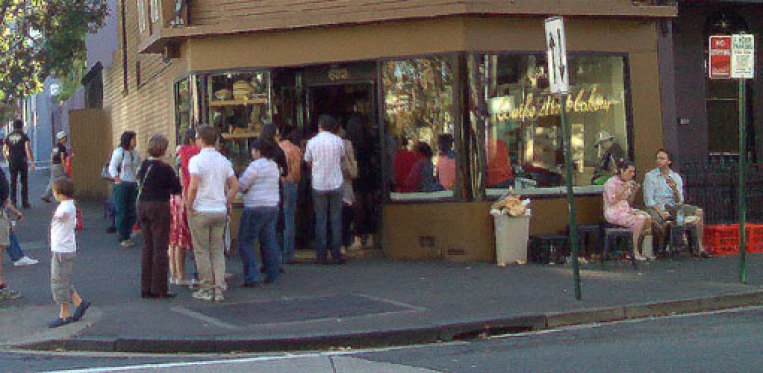
I was sitting in the park opposite the Bourke Street Bakery earlier today. It was nice just to sit in silence and watch the only place outside the former Soviet Union where people still queue for bread. It was just a wonderful moment of peace, a moment of quiet in an otherwise busy few days.
After the excitement of seeing Dave Mason at The Basement on Wednesday night, I had another night out on Thursday for the Australian premiere of the new Barry Humphries show. It was a star-studded night with celebrities galore. We were seated next to Ed Phillips (Temptation) and just behind Karll Stefanovic, Michael Willesee Junior and Tina Bursill. OK, so they weren’t big celebrities, and a few of them did leave at intermission…
That a few people left at intermission didn’t surprise me, as the first half featured Les Patterson and Sandy (the old bloke) whose black and morose humour is in stark contrast to that of Dame Edna, and was probably not what the majority of punters were there to see. Even at intermission, I didn’t really get the sense of a buzz from the audience.
Surry Hills must be the only place outside the former Soviet Union where people queue for bread.
That Barry Humphries received a standing ovation at the end was, I think more out of respect for a life-long career – he’s been doing Dame Edna for 50 years than in recognition of a great show. I mean, I’m a big fan, and have been to quite a few Barry Humphries shows in the past, but I was a little disappointed.
The following day at work I was discussing this with some people who had been there who enjoyed the show much more than I did. When I admitted I was disappointed with the same old jokes, a colleague reminded me that when you go and see a band you know incredibly well you get angry if they DON’T do the same old songs, a fairly spurious argument in my view.
At the end of the night, Graeme and I went for a drink at the nearby Irish bar which regularly changes its name. We then wandered along the street where I pointed out the location of the hairdresser from hell and noticed the anti-shooting up blue light at the entrance of a nearby backpacker hostel. Oh Sydney, you have changed.
And then last night, Colin and I went to Sydney Theatre for the final in the current season of Up Close & Musical. The lead act was Simon Burke who I thought was absolutely tremendous, basing his act around the children’s television series, “Play School” in which he regularly features. There were love songs to Jemima and Humpty Dumpty and he sang “I Don’t Know How To Love Him” to Big Ted… “and I’ve had so many bears before in very many ways, he’s just one more”. You couldn’t help but laugh.
I kept an eye out for Tyson who was apparently there but didn’t see him. Not all that surprising as UC&M was well attended last night. Hopefully, it will be just as popular, if not more so, when it resumes at the Theatre Royal when “Company” opens in July.
I was moved by the comments of the Korean Ambassador, as he spoke passionately about the profound effect of the Korean War. He talked about how people from all around the world came to a country they hardly knew existed, and for their efforts, the people of Korea remain grateful.
I was the opening of an exhibition, inspired by the book “Passage to Puusan’ by Louise Evans, which told the story of “A struggling Brisbane mother (who) travels to Korea to visit the grave of her son who was killed in the Korean War”. As a result, a family friendship between Korea and Australia has now developed over three generations. It sounds like a wonderful story, and I really must read the book.
Co-incidentally, I first met Louise several years ago at the ABC. But it was through another friend, Sooyong Kim, the exhibition’s curator, that I was invited to last night’s opening.
It’s a moving story, and a moving exhibition, and well worth a look, at the Korean Cultural Centre at 255 Elizabeth Street, Sydney for the next month.
“The further up the hill you lived, the more money you had; the better school you went to; and the less you had to worry about floods…”, was how I once described to a colleague the “class system” in Lismore (my hometown in Northern NSW). She, too, had grown up during the 60s and 70s in a working-class Catholic family, albeit in Brisbane, but agreed, “Yes Catholics spend their entire lives trying to make it to the top of the hill”.
For a long time, it seems to be Catholic in country NSW, meant you never had a lot of money. Was it the size of the family? Was it the Irish background? Yes, and probably other factors too. Though there were obviously lots of wealthy Catholics back then, for me and my peers, Catholic living in a country town inevitably meant “poor” or at least “working class”.
And in Lismore, the geographic (and economic) hierarchy from bottom to top was: North Lismore, South Lismore, East Lismore, Lismore Heights and then Goonellabah. North Lismore always flooded, and so that’s where the poorest people lived (including most of Lismore’s Aboriginal population). South Lismore came next, though oddly enough, South Lismore and North Lismore are geographically next to each other, and there was a lot of connection between the two. And so it goes. Though I should offer a “rider”, as there were parts of South Lismore and East Lismore that flooded as much as North Lismore. It’s hard to imagine now, but as you drive over the Ballina Street Bridge, there were houses on the river bank, inhabited mostly by Aboriginal families, which always flooded.
Though we had family who lived on “higher ground”, I was never really aware of the differences until I went to Richmond River High School. Suddenly, I was surrounded by people with a lot more money, and who didn’t have to worry about “packing things up” (just in case) when the river came up. It’s not something that worried me, but it’s just something I’d never noticed previously. That said, our high school was always considered “bottom of the rung”, because it was located in North Lismore and therefore flooded.
Is there a “hierarchy” these days? I’m not sure, as it’s thirty-something years since I’ve lived here full-time. The only thing I’ve really picked up on is a “hierarchy” between those who live “IN Lismore” and those who live “OUTSIDE Lismore”. “You live IN Lismore?”, I’ve heard people say, mostly followed by “What a hole”.
And me? I now live on a hill, albeit in Sydney. “If my place ever flooded, Sydney would be in serious trouble”, I’ve told family members unfamiliar with the geography.
But I remain a “Proud Southie”, and keep a keen eye on things. The family and I spent a bit of time yesterday going through photographs from the flood earlier this year, which saw backyard inundations for a number of family members, one family member getting awfully close, and another family member actually have water inside their house. We also talked a little about which shops in South Lismore had been impacted by the floods, which had quickly re-opened, and those which have never re-opened.
The water almost entered Nancy’s house on Union Street, South Lismore, as viewed from Pat’s place.
We also spent a bit of time looking at family photographs. Going through old photograph albums and “biscuit tins”, we unearthed some real gems.
We also unearthed a few previously forgotten photographs of me. Oh, that centre part!
Gloria O’Brien – Long HairSitting on the Robert White Bridge, after much of it was washed away in a flood.
One of the jobs I’ve taken on is to begin to digitise the large collections we have.
And then last night, we went for a look around the neighbourhood. Here are some of the “Christmas Lights of South Lismore”.
For the most part, the weather’s been overcast since I’ve been home, and we’ve had a couple of late afternoon rain and thunderstorms.




One Comment