I don’t exactly know why I took a photograph of a cup of peanuts at the pub on Friday night. I mean, I’ve always been reminded of that statistic – though it’s probably an urban myth – that when tested, the average hotel bar peanut bowl contained traces of fourteen different urine samples. Yes, that’s right girls, it’s boys who go to the toilets who don’t wash their hands, and then immediately afterwards, grab a handful from the peanut bowl.
In the midst of the peanut picture, there are many other fun photographs of friends, Graeme and Andrew as we went out for a drink or seventeen on Friday night. Meeting up at about six o’clock after work, we chatted about life, the universe and Britney Spears over a couple of beers. Before we knew it, we were sitting in a takeaway on Oxford Street eating food that probably contained more salmonella than would be fit for human consumption, but which I have a natural resistance to, having consumed so much of it over the years. And then minutes later, we were disco dancing at Palms.
I don’t go dancing much anymore, although I used to really love going out on the town. “Come for a dance”, Andrew said. “No, I replied. I’m only dancing if Kylie comes on”, which I think Andrew regarded as a refusal for the entire night. I think he thought I was one of the social-phobic dancers who will only get on the dance floor having consumed a beer or seventeen. Minutes later, Kylie came on and I was on the dance floor faster you could say, “Better Than Danni Minogue”. It was a great Friday night and much fun was had by all.
And then last night I went to a dinner party, the first dinner party I’ve been to in quite some time where I was met some entirely new people.
“Do you know how to carve?”, one of the guys said to me as he was asked to take on “the man’s task”. “No idea”, I replied as it’s been ages since I’ve cooked a roast myself. It then led to one of those confused discussions with seemingly no end in sight, about whether you carve with or against the grain. After considering a range of options, including chopping up the very beautiful and tasty roast into “chunks”, the roast was finally, beautifully carved.
Going to a dinner party where I knew only one other person is something I haven’t done for quite some time. But when I received a call yesterday from a workmate inviting me to dinner, I decided to quickly address my usual social phobia and accepted the invitation. And I’m really pleased I did, because, although I was the odd one out in a group of long-term friends, I felt incredibly comfortable, and they were all very welcoming to “the new guy”. It’s great to be adventurous.
“Marlborough House” is a building I’ve walked past possibly hundreds of times, and yet have had no idea what was located inside. A bit of googling reveals this massive building is home to fashion graphic designers, fashion designers, furniture designers etc.
I only really discovered it today when I went walking along Marlborough Street as part of my ongoing photographic project, Surry Streets. I actually thought it was one of those massive residential apartment blocks springing up around Surry Hills, but apparently not.
It absolutely dominates one end of Marlborough Street which stretches from Cleveland Street right up over the hill to the other side of Devonshire Street.
As you walk along the street you pass interesting old terrace houses, interesting businesses, Ward Park, and St Peter’s Catholic Church to name but a few of the sites you encounter.
She wasn’t as “candid” as I’d hoped she would be, given the machinations in the Liberal Party over the last few weeks, but she was still interesting. Amanda Vanstone was the latest “political guest” at Giant Dwarf, having followed in the footsteps of Tony Windsor and Julia Gillard.
I missed Gillard, due to my overseas holiday, but had previously enjoyed Windsor, so when a friend asked me if I wanted to attend I signed up straight away. The premise is simple: Julian Morrow and Kristina Keneally chat to a former politician, and ask them to select some photographs from their “public life”.
Interestingly, Amanda Vanstone chose a lot of photographs of her dogs. Clearly there were some photographs chosen by Julian/Kristina, as there was one photograph which the former Senator had absolutely no recollection of, and one which she thought was a “montage”.
Although I was hoping she would reveal more about the recent machinations in the Liberal Party, she noted it was seven or eight years since she was a member of Parliament. That said, she revealed a few things. For example, she said she thought Peter Reith could have been a great Prime Minister. Sadly, Julian and Kristina didn’t press her on this, so we never learned about why. She also revealed the close friendship she had with Christopher Pyne and his family. I knew he had been her Press Secretary, but I never knew it had extended to a family friendship, and that she and Mr Pyne remained close friends.
That said, there were no further “reveals” and that disappointed me slightly. Also, the conversation at close to 100 minutes probably went on a little too long. Maybe an extra glass of wine might have helped all of us? :)
Julian Morrow, Kristina Keneally and Amanda Vanstone
When Mitch Grant was 21 years old, his life took a sudden, irreversible turn. Just ten minutes after the New Year’s Eve fireworks, a motorbike accident on Lane Cove Road resulted in the loss of his left leg and a severe injury that left his left arm completely without function. Reflecting on his journey, Mitch stresses that recovery was never purely a physical battle. Instead, it was defined by a series of critical, paradigm-shifting conversations—some with family, some with strangers, and others with fellow amputees—that ultimately transformed his perspective from despair to purpose.
In the immediate aftermath of the trauma, Mitch underwent emergency surgery and was placed in an induced coma for four days to allow his body to stabilize, followed by four and a half weeks in the intensive care unit. Because of his heavy medication and fluctuating state, he struggled to retain information, forcing his parents into an agonizing cycle of repetition.
As Mitch recalls, “I would ask them, what am I doing here? Where am I… And then they’d have to tell me that I’ve had a motorbike accident. I’ve lost my leg… they had to do that three or four times a day for like three and a half, four weeks. To this day that still brings both my parents in tears when they talk about it”.
Recognizing the immense toll his condition was taking on his support network became his initial catalyst for internal strength. He realized he had two choices: succumb to depression and substance abuse, dragging his loved ones down with him, or resolve to “get up and get on with it”.
The true turning point occurred several weeks later on the hospital ward. After a highly distressing incident involving a bedpan—an experience that shattered his youthful sense of invincibility—Mitch retreated into a dark, isolated headspace. He pushed his parents away and refused visitors.
However, a desperate request from a nurse shortly after this low point changed everything. A 13-year-old boy in the adjacent room had recently lost his hand in a car accident and was struggling so heavily that he had been placed on suicide watch. Despite his initial reluctance, and questioning what a 21-year-old leg amputee could offer a young boy who had lost a hand, Mitch agreed to be wheeled into the room.
Their initial interaction was awkward and mostly silent, but Mitch left a standing fan in the boy’s room to help him cope with the summer heat. The following day, the boy requested Mitch return, sparking a genuine connection. Mitch notes, “We actually had a conversation for about an hour. We didn’t talk about being an amputee. We didn’t talk about our accident… We spoke about footy, spoke about school… We just spoke totally about random things, a lot about sport”. The boy was discharged shortly after, leaving behind a brief note of profound gratitude.
The impact of that simple exchange left a lasting impression on Mitch, who says, “And that was when I sort of realized, okay, it’s just a conversation, right? We didn’t have to talk about being an amputee… It was literally just a simple conversation. And it… helped me as much as I helped him… I realized the power of a voice and a story”. This human breakthrough proved that they did not need to dissect their shared traumas to provide mutual mental clarity.
Before the accident, Mitch was an apprentice carpenter. While his missing leg was manageable, the loss of function in his left hand made continuing in the trade unviable. Refusing to remain stationary, he shifted gears completely.
Alongside his father, he opened a gym franchise, hoping to create an inclusive community space where able-bodied and disabled individuals could train together.
His trajectory shifted once again when his mother relentlessly urged him to look into a revolutionary socket-free procedure known as osseointegration. After witnessing the fluid mobility of pioneering patient and Paralympian Brendan Burkett, Mitch chose to undergo the surgery. It eliminated the daily pain and instability of traditional sockets, making putting on his leg “as simple as putting on a pair of shoes”. This milestone led Mitch to volunteer as a global advocate for the procedure, eventually transitioning into his current primary career as a distributor of advanced prosthetic technology across Australia.
Holding a prosthetic arm and standing in front of some boxes of the many prosthetics he now distributes.
Through his global travels, Mitch has met individuals who continually reshaped his definition of resilience. One such figure was Michael Swaine, a British military veteran who lost both legs to an improvised explosive device (IED). Visiting Swaine in the United Kingdom provided Mitch with a sharp dose of perspective when Swaine insisted they walk to a local park with his young children and dog rather than take the car. Mitch remembers the interaction clearly: “He’s goes, ‘Where are you going?’ I go, ‘To the car.’ … And then he’s clicked and he’s gone, ‘You lazy bastard… You’re only missing one leg. I’m missing two.’ … This guy, he’s got two young kids… and a dog and he’s missing two legs and he’s taking the kids down the street to the park. Like, just blew my mind”.
Years later, when Mitch welcomed his own child, the memory of that conversation and the security provided by his osseointegration surgery gave him the absolute confidence to carry his infant safely. Ultimately, Mitch views his entire trajectory not as a tragedy, but as a series of open doors. He remains driven by the fundamental belief that sharing an average, relatable story can completely alter someone else’s outlook. For Mitch, recovery is defined entirely by one’s mindset, concluding that “It’s a big mental game. It’s gotta start with you. It’s not a physical game”.
Note: The audio from this conversation with Mitch will appear in the Limb Shift podcast launching in October, and which will be available on this website, Spotify, YouTube & Apple Podcasts.
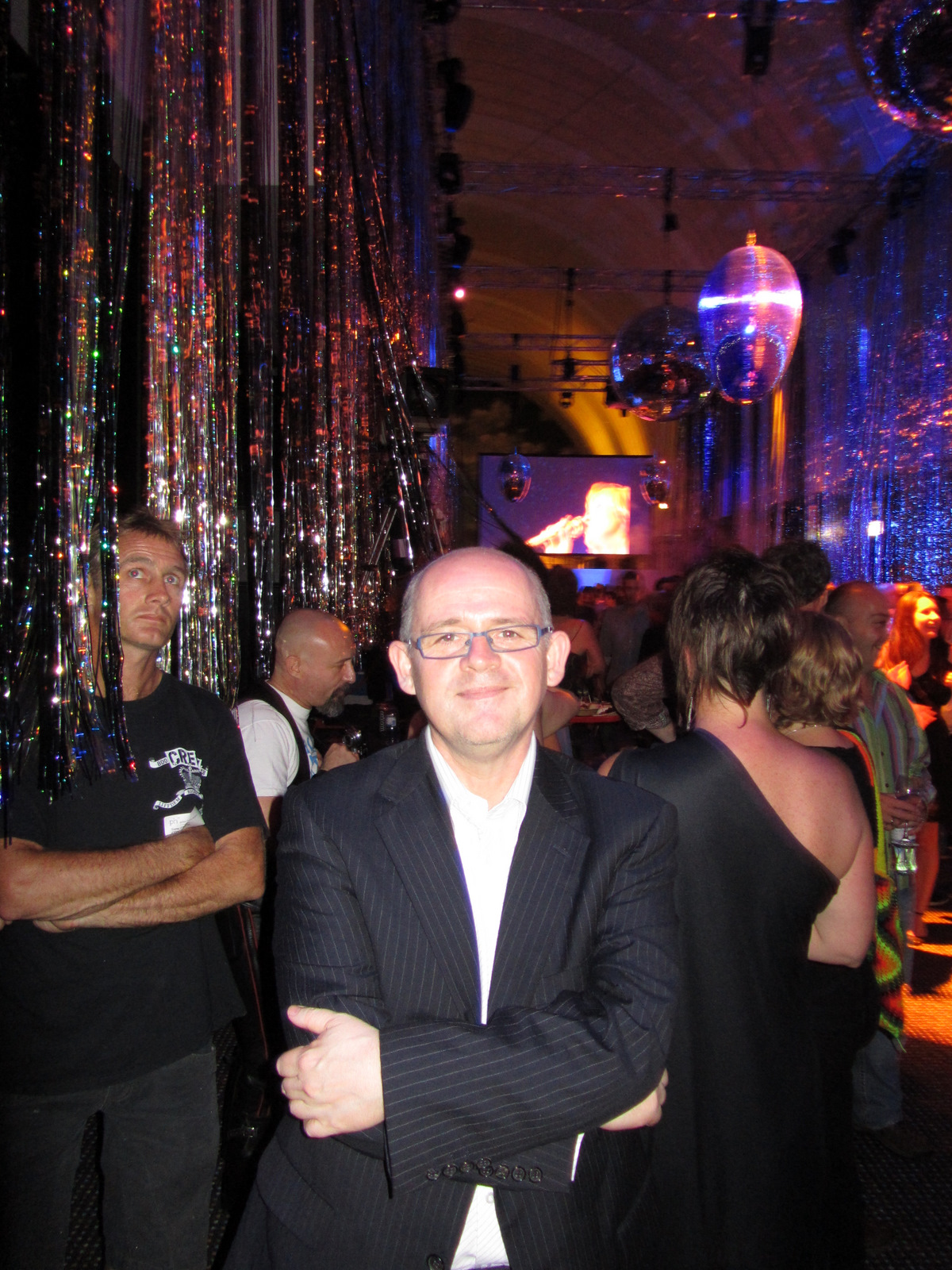
“This is probably the best opening night at the Powerhouse Museum I’ve ever been to”, I told a colleague as we walked around the party. With simple clever staging, and buzz that came from having a “fan” event (rather than the usual C-Grade celebrity suspects), there was a real sense of occasion associated with the opening of ABBA World in Sydney.
The first musical act of the night – re-interpreting ABBA songs – was Katie Noonan. Her beautiful, soaring voice was eminently suited to classic songs – she kept saying “but of course you know this song” – including “Dancing Queen” and “The Winner Takes It All”. It was during “Dancing Queen” I remembered all of the musical discussion there’s been over the years about the vocal range of that song, and though she did a really great job dealing with the range of a song normally covered by two different voices. She and her band re-interpreted the songs in their style, though still remaining true to the essence of both the pop and melancholic elements you most commonly associate with ABBA.
After a brief introduction by the evening’s host Julia Zemiro, we were invited to take our first look at the exhibition. As there were 850 attending – which we discovered from the very friendly, chatty woman whose role was to allow us into the exhibition in an orderly manner – they needed to allow us through in “shifts”. Unfortunately we missed the first shift and had to wait maybe 20 or 25 minutes. That was okay, as we chatted to her and briefly to the people behind us. There was a warm, friendly buzz in the place, so we didn’t mind the wait.
And then finally, we made it into the exhibition. Although I’d been to the exhibition opening in Melbourne, this wasn’t a simple repeat run of what I’d seen there. In some ways, it’s almost a completely different exhibition. Although many of the highlight elements from Melbourne are there – the helicopter, the costumes, the archipelago room and so on – this exhibition has a much stronger “Australian” element. The large amount of early Swedish material has been replaced by large volumes of material associated with ABBA in Australia and the 1976 visit and the 1977 Australian tour. There are also, for example, lots of very personal items from fans in Australia, like scrap-books.
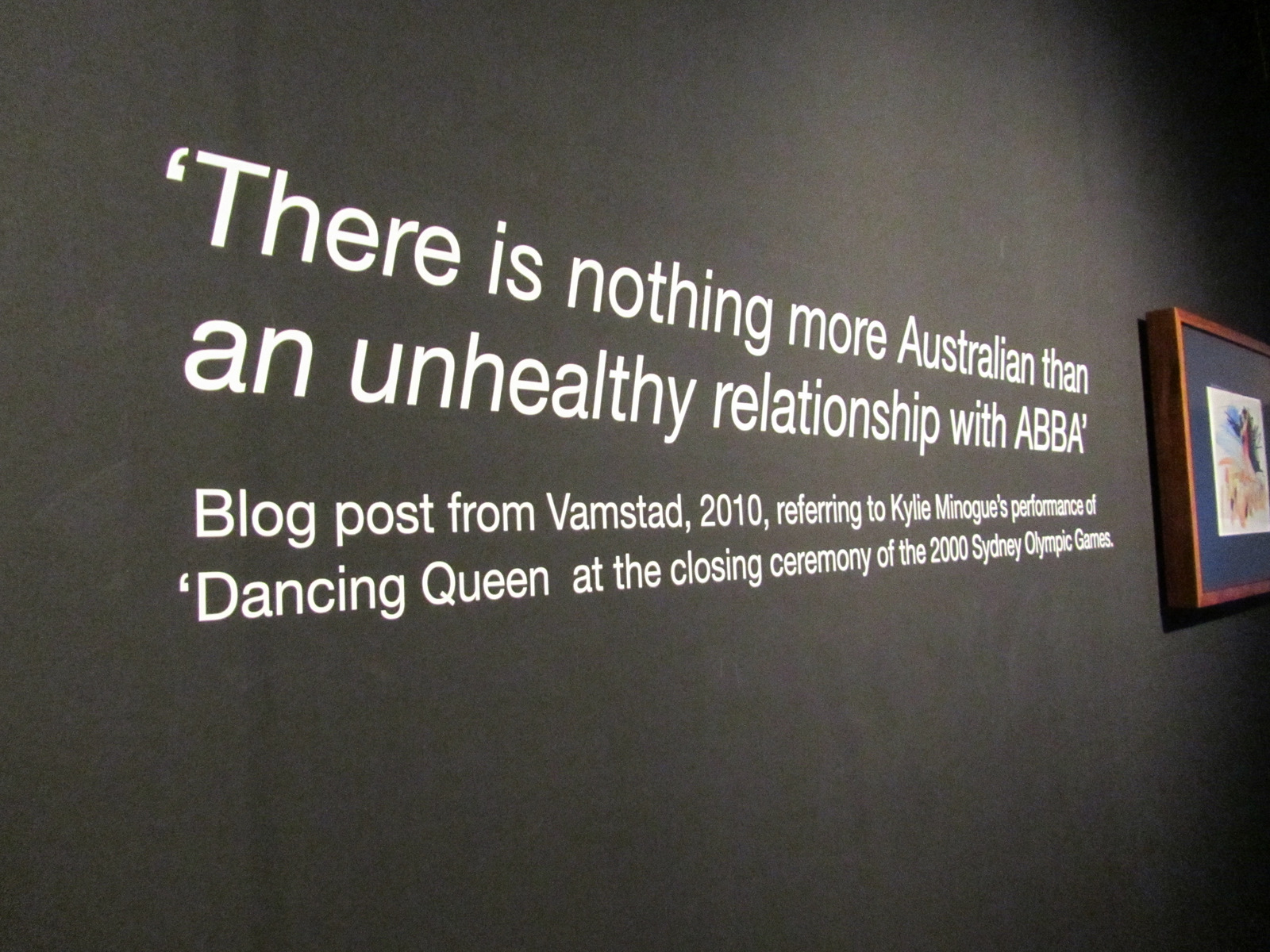
This Australian-ness in the exhibition is also evident in some of the simple text on the wall. They quote, for example from the book by Australian fan, Chris Patrick, and they use a wonderful line from a blog which says, “There is nothing more Australian than an unhealthy relationship with ABBA” (too true). These exhibition quotes also feature lyrics, firmly centreing the exhibition in ABBA’s music.
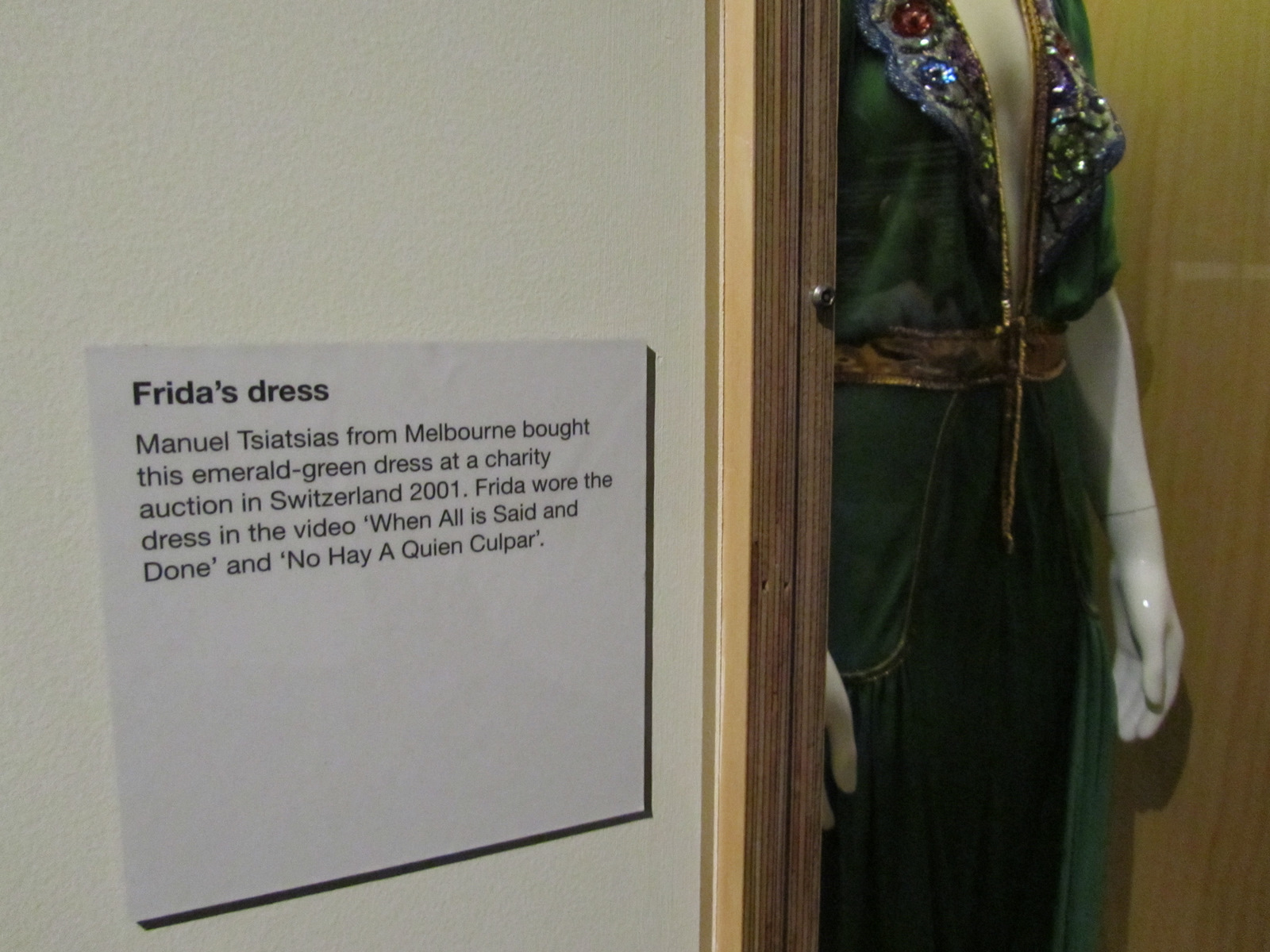
A lot of the information from the exhibition has also been updated since Melbourne, including for example, some biographical information about Frida, mentioning her October 2010 release of “Morning Has Broken”.
After a good ninety minutes walking around the exhibition – we could have stayed longer – we wandered back to the party. By this time we’d missed Andy Bull singing, and the apparently hilarious trivia competition run by Julia, but were back in time for iOTA. He’s an Australian singer/actor who blurs gender lines in his on-stage performances, and he’s probably, by nature, more inclined to rock than pop. He came on-stage in a wild, red wig and did three songs from the earlier part of ABBA’s career. His versions were more along the lines of some of the ABBA metal and indie cover albums released through the years. He rocked.
From what I could see there was only one “celebrity” in the audience – the Olympic diver Matthew Mitcham (though I suspect he was there because he was a fan, not because he was a celebrity) which gave the event a different feel to many opening nights I’ve been to. Instead there were fans, and there was a lovely family element to the evening with lots of parents attending with their children. There was such a wonderful sense of joy seeing a bunch of kids singing along in the hologram section with absolute joy instead of the usual bunch of 50 year old poofs (I include myself in that).
Overall, it was a great night which I enjoyed very much.
There’s a bloke I see regularly back in Sydney who I’ve nick-named “The You’re Beautiful Guy”. I often see him walking to and from work, usually in the Devonshire Street tunnel. I suspect he may have a slight intellectual disability. Joyfully, he walks along telling people that Jesus loves them, and that “they’re beautiful”.
For a brief moment today I thought I’d turned into that guy. As I walked around Stockholm, I kept saying (to myself under my breath) “gosh it’s beautiful”.
It was a truly stunning day in the city. Even though the winds were a little strong, causing the lake to be a little choppy, the sun was warm and there was a lovely vibe around the city. When I checked for the temperature at about 4.30 this afternoon, my phone told me it was fifteen degrees. “That can’t be right”, I thought to myself. But compared with when I was last here a couple of weeks ago, the snow and ice have all but disappeared (though part of the lake nearby remains iced over in the parts), and people aren’t as heavily dressed.
So for me it’s been a day of relaxing, wandering around, sitting in the sun for a while to read a book and to listen to some music. It’s nice to be back. I’m sure I’ll get around to something “productive” some stage later in the week, but right now, it’s nice just to “hang out”.
I also realised today I only have two or three weeks left of travelling. Having now “relaxed” into my holiday, I’m not sure if I’m ready to go home yet.
Also, I suspect the guy I’m renting this apartment from may need to get an eviction order to remove me at the end of my stay here :)
This morning, I had the opportunity to chat with Hamish Macdonald on ABC Radio Sydney about a significant milestone – the first anniversary of my amputation. A year ago on this coming Sunday, I was rushed to the hospital, underwent a lower right leg amputation, and began a whole new chapter in my life. During the interview, I kept one key thought in mind: what valuable insights could I share with others facing a similar challenge? Hopefully, my story resonated and offered some helpful advice. On Sunday, I’ll share the written story, but right now, here’s the audio, and a fairly accurate transcript.
Hamish : And joining me in the studio this morning on 702 Mornings is our colleague James O’Brien. He’s a voice that you might have heard before. These days, he’s on the planning and strategy side at the ABC, but if you’ve been listening to ABC Radio for some years, you’ll know his dulcet tones, especially if you’re from the regions or you’ve got relatives in regional New South Wales.
James was on mic for more than a dozen years, delivering a daily radio program to those of you across the New South Wales regions. Over that time, he would have done lots of stories himself on diabetes, on disability, as well as things like overseas holidays. But just over a year ago, these three things really came together in a pretty extraordinary set of circumstances and turned his life upside down.
James has survived, though, to tell the story, and in fact today, well this week I think, he’s celebrating what he’s calling his stumpversary, which I feel like I’m not entitled to use. But anyway, James is here to explain. Good morning, James, how are you?
James : Hi there, Hamish. Yeah, stumpversary, I can say that. Other amputees can say ampuversary. Yeah, I’ve got to worry about it. Yeah, look, we can say it. I can say it.
Hamish: So explain stumpversary. What does it actually mean?
James : Okay, so on the 30th of June last year, I call it my end of financial year discount, I was taken to the hospital in an emergency situation and the lower third of my right leg was removed. It was the combination of a bunch of things, including an infection in my foot that just went a little bit crazy, sepsis, things like that, also diabetes. And even though it’s my individual story, it’s a really common one. The estimate is that something like 8,000 Australians each year will have an amputation. 160,000 in Australia, it’s growing at 2.2% each year. Three-quarters of men, because we don’t look after ourselves. And so it’s a huge issue. And in fact, in terms of diabetes-related amputations, we have the highest rate in the OECD. So I’m hoping by talking about this this morning, that I’m going to create a bit of awareness, particularly for men of my age, but also lots of other reasons that people have amputations too.
Hamish: You’ve written a beautiful account of your experience and your journey over the last 12 months, which will be published on the ABC website. And we’ll put that out as well if you’re listening to this and want to read more. But it struck me in your description of things that, I mean, I can’t even imagine receiving that news that you were going to have to have an amputation.
James : Well, I didn’t actually receive that news.
Hamish : Yeah, because you didn’t sort of explain that.
James: So what exactly happened is I’d been overseas with friends, and I got a bit of a cut on my foot. You know, I had a bit of an infection. And then the sepsis came through and basically started moving up my leg. Meanwhile, diabetes was kicking in, and I went into a bit of a delirium for several days leading up to the situation.
And then on the Friday, I was supposed to deliver some deadlines, which are very important for journalists to do. No one could find me. One of my colleagues, Joanne, raised concerns and tried to call and all those sorts of things. She and two other friends, Andrea and Ross, and my next-door neighbor, Alexis, then knocked on my door. No answer.
The police arrived along with two ambulances and found me unconscious on the floor. I don’t really remember. The only thing I remember of the night itself is Ross standing over me and saying, “It’s okay, James, we’re getting you to the hospital.” That’s all I know.
Then four days later, I woke up from a coma. By which time my niece had arrived down from Lismore. And thank goodness, she’s a nurse. So she understood all this stuff and was able to communicate. She said, “I had to summon up all the courage I had to tell you that there’d been an amputation.” And I didn’t give consent because I wasn’t in a position to do that.
Honestly, I was more off with the pain relief than upset. But I was also quite realistic: much worse things could have happened. Immediately. Yeah, I could have died. So there was a very strong risk of death and/or brain damage.
So when they, at St Vincent’s Hospital, removed the bottom half of my leg, there was the chance they might have wanted to remove more. But it’s remained as a lower leg amputation. They talked to my niece about going further, but thankfully that wasn’t required.
Hamish: You talk in your article about your experience of the sort of adjustment process in, you know, back into the world and returning to work and taking public transport. What’s it been like?
James : Look, at first I could hardly get anywhere. So I was still going around in a wheelchair until about October, November last year. I was in hospital and rehab for three or four months. At first I had a lot of support because I was in a wheelchair. So people see you coming up and they go, oh yeah, well, does this guy need a bit of support? And I did in those early days. The only thing that drove me insane in those early days, being in a wheelchair, were those hire bikes.
Hamish: As in the Lime bikes that get left out on the street.
James: Anyway, so people were parking them in the middle of the footpath. And so I had to go around them and those sorts of things. And, you know, I had friends to push me around. I also had some support from the NDIS in terms of getting out in the community and those sorts of things. But then as I’ve become more and more able, people just don’t notice me anymore.
Hamish: It was an interesting observation you made about being on public transport and because people are standing, you say people are looking on their phones and they don’t actually see.
James: No, they don’t. So I’m still wearing mostly shorts, because I can’t get my pants over my prosthetic leg. But this morning, I got on the light rail this morning to come in here and there were six people sitting in those wheelchair places on the light rail. I saw a couple of people look up and then look back to their phones and then finally one person said, oh, would you like to sit here? And then the others did as well. So, you know, I just think people kind of think, oh yeah, he’s got a prosthetic leg. He’s fine. He’ll get around. But there was a long period of adjustment.
Hamish: Do you ever say to people, hey, do you mind getting up?
James: Sometimes I do. But mostly it’s when someone else needs it as well. Like if I get on at the same time as an older person with a walking stick or walking frame or something like that, I’ll say, hey, get up, get up and let them sit down. So yeah, sometimes I do.
Hamish: So it’s a good reminder if you’re on public transport or using it. Look up or look down. But also if you’re going to sit in one of those seats that are reserved, make sure you get up when the time comes.
James: Absolutely. So that’s been an interesting thing. I’ve had a couple of people – some just don’t notice. And I had one person push me out of the way to find a seat in the theatre, which was a bit of a nuisance. And I had one person also with a pram who thought her SUV-sized pram was more important in terms of mobility.
But, you know, mostly people are really fantastic. They’re really great. They sort of look and say, you know, can I help you with something? And that’s a much better thing to say to someone in this circumstance. Can I help you with something as opposed to, would you like me to do this for you?
You know, because when you say, would you like me to do this for you? It sort of takes away your power. And I had a bit of an incident earlier in the piece with friends who wanted to do things and they said, we’ll go to your house and do this for you. And I really got quite shitty with them. And I said, look, no, I don’t want that done. It’s much better to say, do you need some help? Would you like, not would you, can I do this for you? It’s what would you like, you know? Yeah, right. So less specific, just be open, you know, to what’s needed.
Hamish: You’re hearing the voice of James O’Brien, a familiar voice here on the ABC, marking his, what he calls, stumpversary this week. What about the emotional side of it? Because you also mentioned friends and family, some maybe not quite believing how okay you have said you are.
James: I’d been to Cambodia and I’d met people who had lost limbs through landmines…
Hamish: This was the holiday immediately before?
James: Yeah, the holiday kind of made me a bit aware of these sort of issues already. And I thought to myself, wow, I’ve lost a limb in a first-world medical facility. It’s fine. I’ve got lots of support around me. It’s fine. And look, two years earlier, my family had survived the Lismore floods. So I just thought, this is absolutely okay. But lot of people thought I was in denial. And, you know, at the hospital, I had a psychiatrist come and talk to me and she was concerned that I was in denial. And look, you know, maybe at some point there’ll be moments when I’ll go, you know, what has happened to my life? But, you know, I’ve been okay with it. But some people get really upset. When I was in hospital, there was one young guy who’d also had an amputation and he was in tears all the time. So, you know, people respond in different ways and there’s no right way. There’s just the way you respond.
Hamish : What about sport and activity and stuff like that?
James: I was never very sporty, but I have been to wheelchair basketball a couple of times. And there are some young women there who are just amazing. There’s one who found that a prosthetic leg wasn’t for her. So she actually just gets around with crutches, which just does my head in. Personally, I just know I couldn’t do that.
There are other people in much worse situations. I’ve been part of some international Facebook groups, which I’ve had to stop going to because they were just too upsetting. Particularly the American ones were really upsetting because of their health system there. They don’t have the NDIS (National Disability Insurance Scheme). And I was just reading these people saying, oh, look, I’d really like to get a prosthetic leg, but my insurance won’t cover it. So I’ll be praying to God to get a leg, to which I would say, well, you know, in Australia, we just pray to Bill Shorten and the NDIS can help out. So that’s been a really interesting thing to deal with. I’ve also seen and talked to people on these Facebook groups about, you know, much, much worse situations than me. So I feel fine about it all, you know.
The only thing I sort of worry about is ongoing relevance. And I’ll tell you, I’ll tell you a slightly naughty story. It is a slight naughty story. You know, obviously, you know, I’m 58 years old and, you know, I have wondered about my attractiveness as a man having lost a leg. And I was in an Uber recently and the Uber driver propositioned me,
Hamish : What rating did you give? Five stars?
James: Oh yeah, absolutely.
Hamish: Great to see you. Thank you for sharing the story. And as you say, so many of us don’t think about some of the critical things.
James: Can I say there’s one organization I’ve been involved with, which is called Limbs for Life, which is a national support agency for people. It’s a peer support agency. And maybe two or three weeks into my hospital stay, I got a phone call out of the blue from someone who lives in Newcastle called Clay. Very, very similar circumstance to mine.
Hamish: And it was just great to talk to other people in this circumstance. A text from Zoe says, James is the best. Back when I worked at the ABC, he was always so kind to me. Knowledgeable, funny, interesting. Sending him all the best. I don’t know if you know who. I know exactly who it is. James O’Brien, thanks very much.





Plus you have to be in it to win it!
The more people you meet, the more….